Follow us @ facebook.com/hopedemetriades Copyright © 2015, Hope Demetriades. All Rights Reserved.
Hope Demetriades
"The North Stars: Canonizing the American Abolitionists"
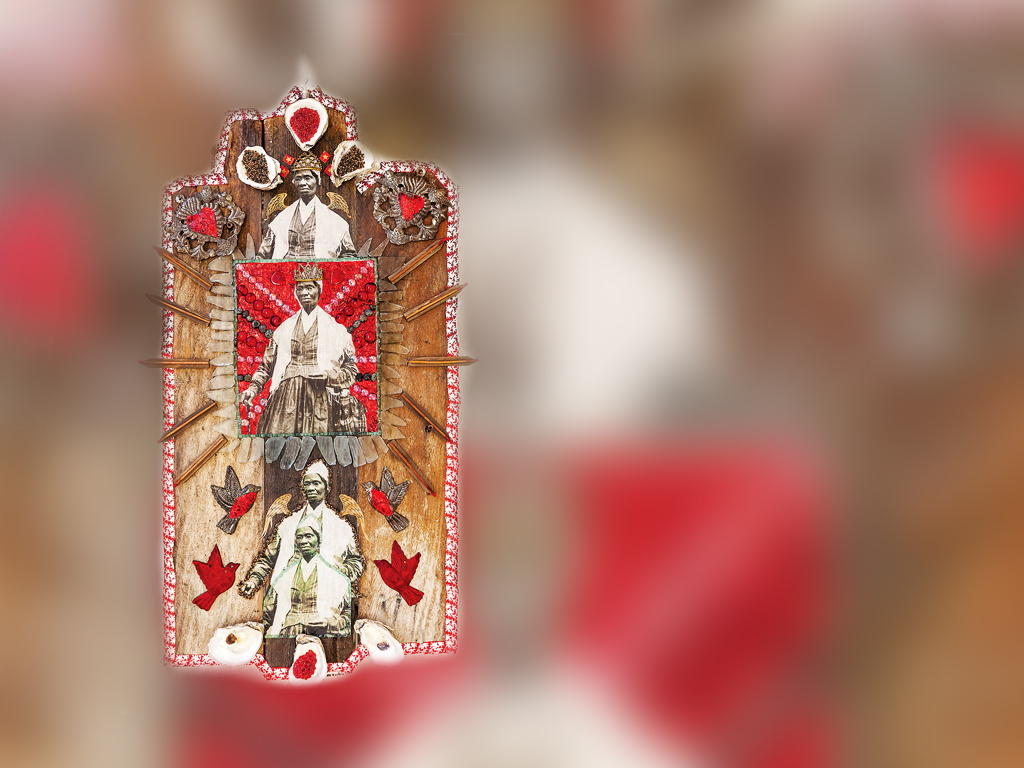
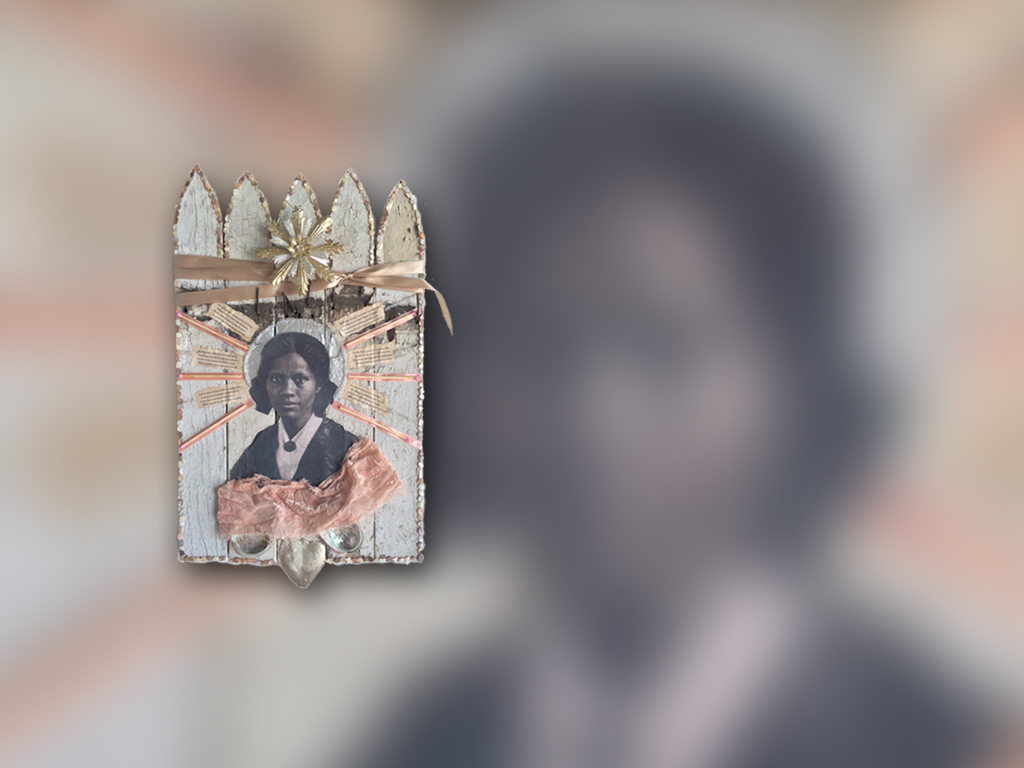
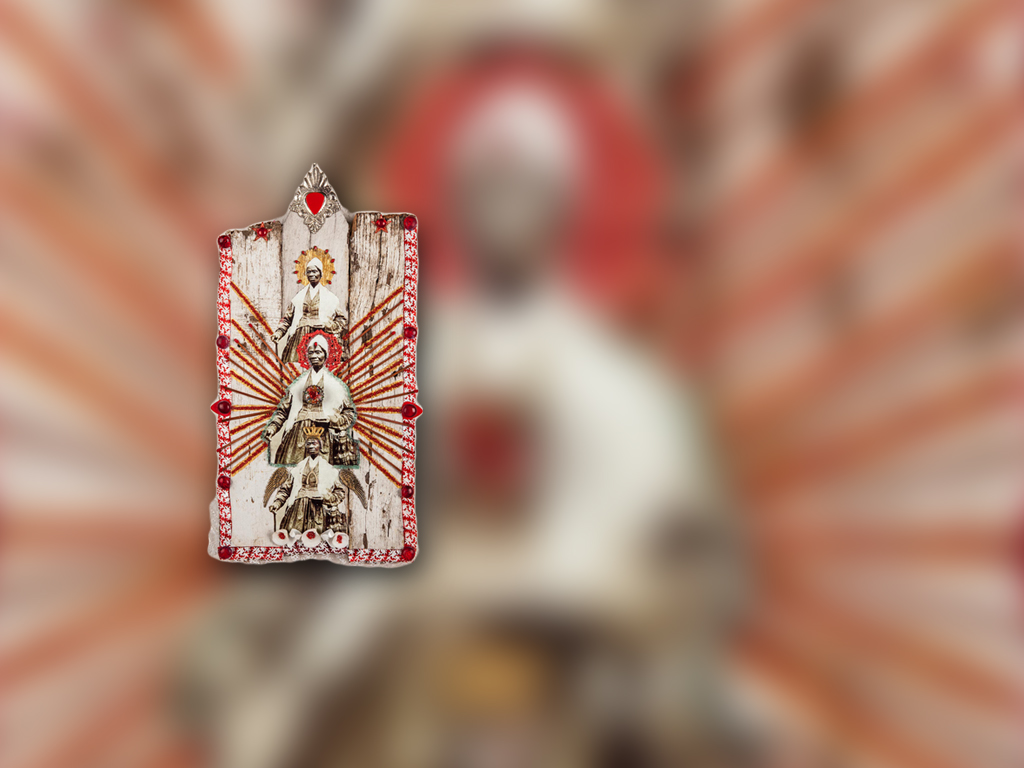

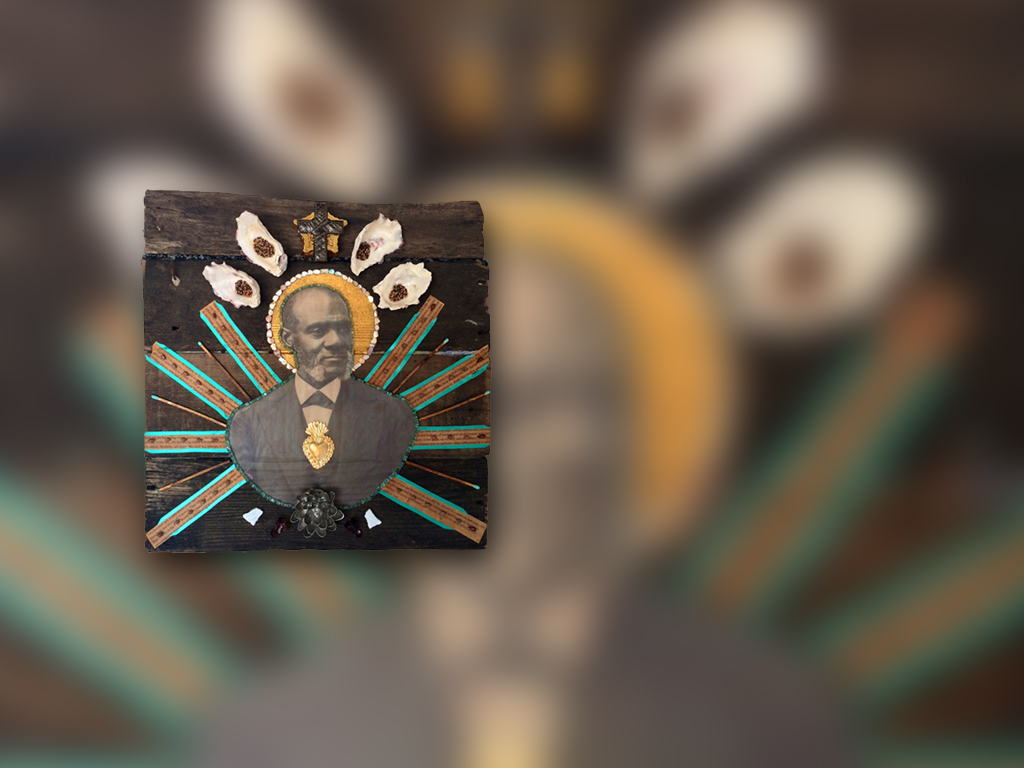

"Sojourner Truth"
Sojourner Truth was the first African American woman to successfully sue the American government to get custody of her son who had been illegally sold into slavery. She was an influential orator who, though she did not speak "the Queen's English" like Frederick Douglass, was able to sway diverse groups of people toward her cause of freedom. I love her line "If the first woman God ever made was strong enough to turn the world upside down, then women together ought to be able to put it right side up again" from her most famous speech "Ain't I a woman?" The speech was delivered at the Ohio Women's Rights convention in 1851. Most abolitionists also fought for women's suffrage. Her conversation with Frederick Douglass influenced him to pursue a peaceful movement rather than a violent one. When President Lincoln was experiencing harsh criticism from both the abolitionists and the slaveholders, due to his moderate positions, Sojourner Truth decided to meet with him to thank him for all of his hard and hard work toward justice. This meeting holds a special place in my heart, because it occurred on my Nana's birthday which is October 29th.
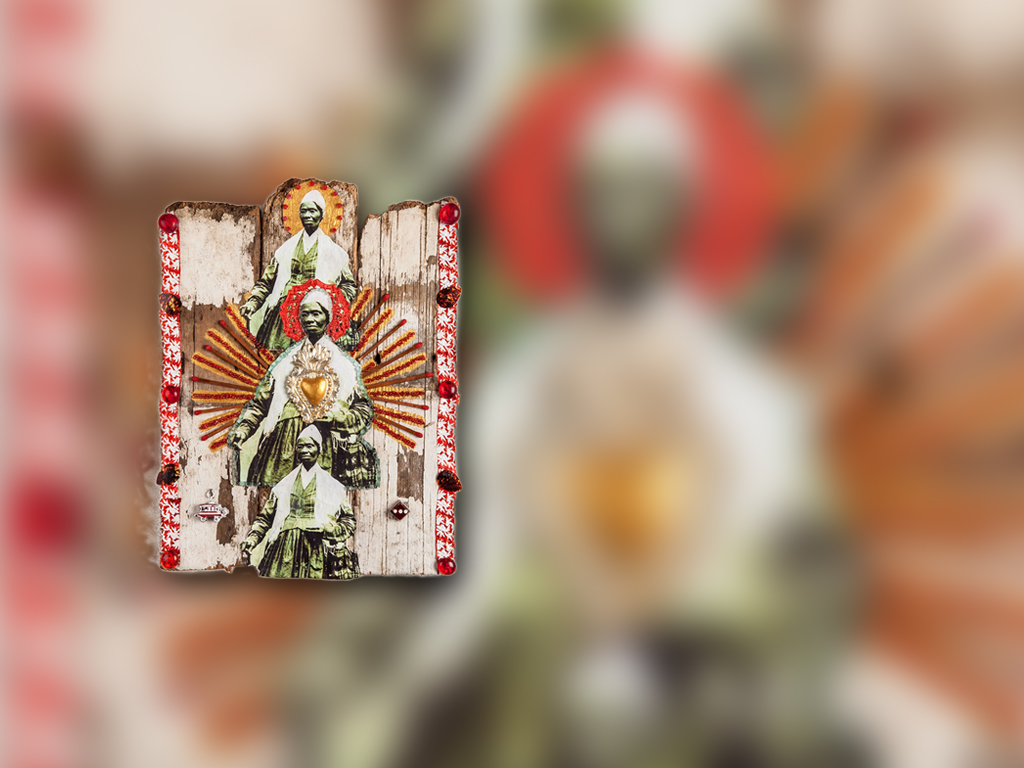
"Sojourner Truth for Malia Obama"
Sojourner Truth was the first African-American woman to successfully sue the American government for custody of her son, who had been illegally sold into slavery. She was an influential orator. I love her line “If the first woman God ever made was strong enough to turn the world upside down then women together ought to be able to put it right side up again.” Her most famous speech— “Ain’t I a Woman?”—was delivered at the Ohio Women’s Rights Convention in 1851. Her conversation with Frederick Douglass influenced him to pursue a peaceful movement rather than a violent one. I made a smaller “Sojourner Truth” piece for Oprah Winfrey because she reminds me of Ms. Truth due to her powerful ability to speak publicly and reach people from all walks of life. I also made a smaller piece for President Barack Obama's daughter Malia, to thank her and her father, mother and sister for their brave service to our country at a time when it is still dangerous for an African American to be in a position of power.
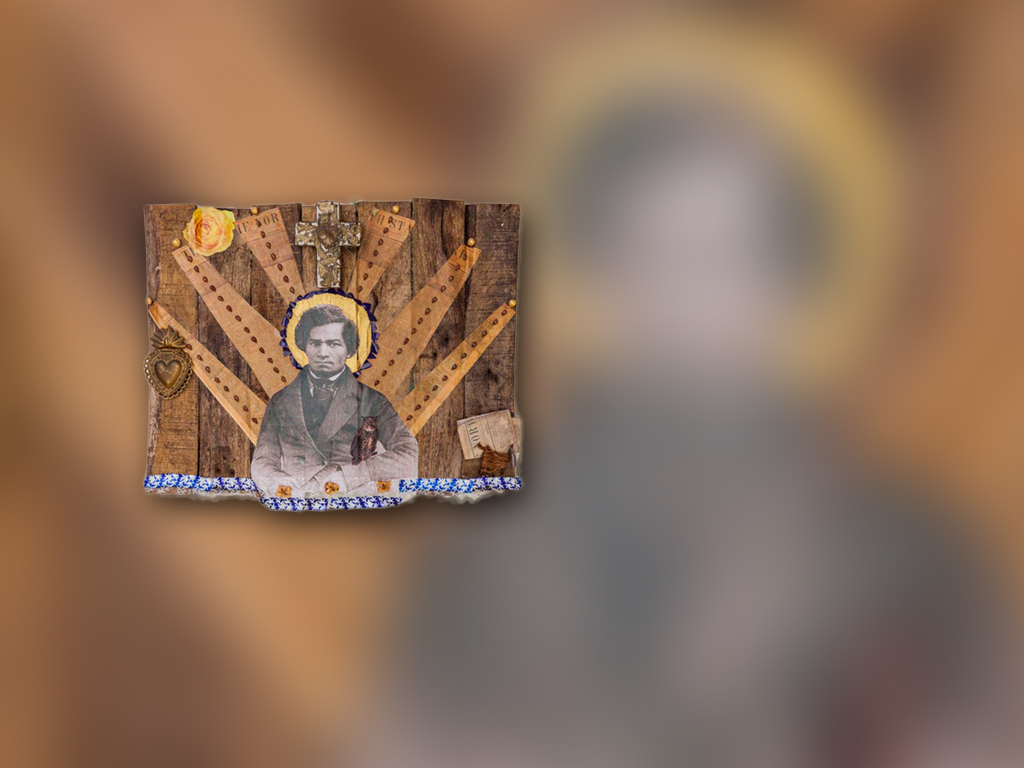
"Frederick Douglass"
Frederick Douglass lived in constant fear of being recaptured and was warned by his friends to not use the real name of his former owner in his writings. But he refused to hide, and poured out his true, unedited experiences of the brutality of slavery in his works, the most famous of which is “My Life as a Slave.” Douglass made the difficult decision to return to America from England (where he was a celebrity and greatly respected) to subject himself to discrimination and danger in order to continue fighting for racial justice. He was also the publisher of the abolitionist newspaper “The North Star.” He was good friends with William Lloyd Garrison and John Brown. After Sojourner Truth had a gentle talk with him, he solidified his desire to be a peaceful abolitionist rather than a violent one. This is where he differed greatly from Henry Highland Garnet and John Brown. He saw both his boys join the Union when the Civil War commenced.
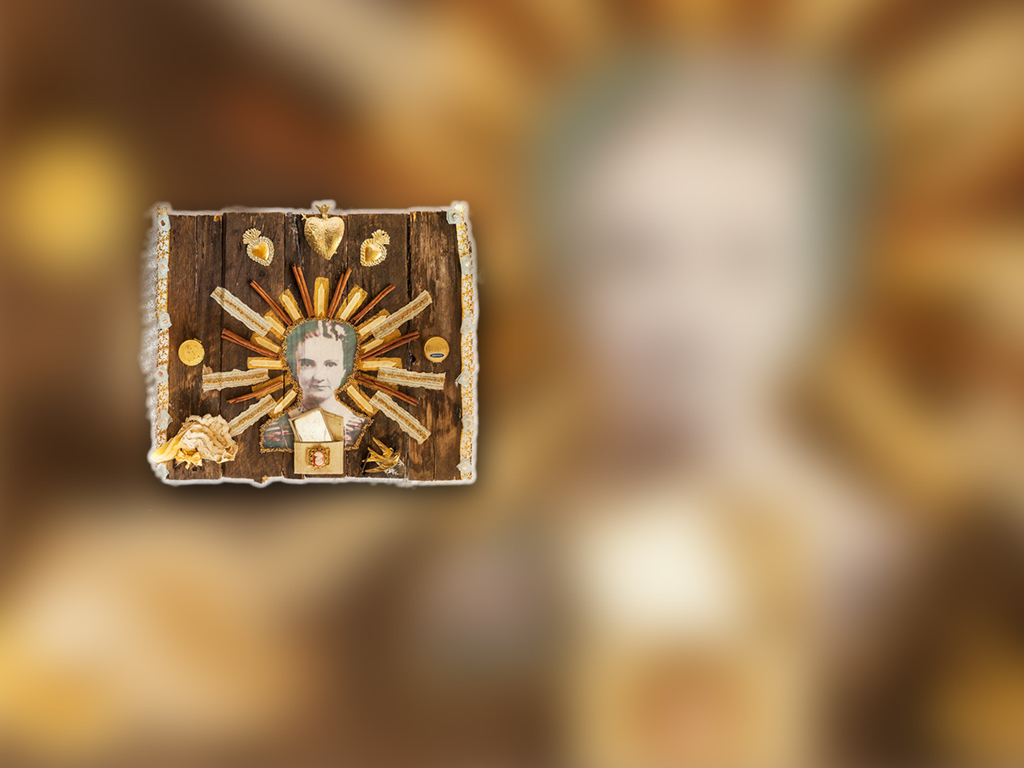
"Angelina Grimké"
Angelina Grimké delivered one of her most passionate and famous anti-slavery speeches in a building, which was later burned to the ground that day by anti-abolitionists. Grimké came from a family so wealthy that each person in her home had his or her own designated slave. Following in her older sister Sarah’s footsteps, she left a life of complete luxury and extravagance to devote her entire life to abolition. “American Slavery As It Is,” a book by Grimké and her abolitionist husband, Theodore Weld, is a compilation of the accounts of slaves—including stories of wealthy slave owners borrowing slaves from other slaveholders because they had so badly beaten their own that they couldn’t use theirs for fancy parties. Gut-wrenching stories like these influenced Harriet Beecher Stowe’s book “Uncle Tom’s Cabin.” For her letter to Southern women, in which she urged them to influence the men in their lives to end slavery, she was warned to never return to her South Carolina home.
"Frances Harper"
Frances Harper was born free in Maryland. She was an abolitionist, poet and one of the founders of the National Association of Colored Women. She published her first book when she was only 20 years old. She wrote her most famous book, “Iola Leroy” (one of the first novels published by an African-American woman), about education for women and abolition, at the age of 67. She also helped escaped slaves on the Underground Railroad. Because words were so important to her, I chose not to obstruct her words at all in her piece. If you have time, please read her poem in its entirety. It is beautiful.
"Sojourner Truth for Oprah Winfrey"
Sojourner Truth was the first African-American woman to successfully sue the American government for custody of her son, who had been illegally sold into slavery. She was an influential orator. I love her line “If the first woman God ever made was strong enough to turn the world upside down then women together ought to be able to put it right side up again.” Her most famous speech— “Ain’t I a Woman?”—was delivered at the Ohio Women’s Rights Convention in 1851. Her conversation with Frederick Douglass influenced him to pursue a peaceful movement rather than a violent one. I made a smaller “Sojourner Truth” piece for Oprah Winfrey because she reminds me of Ms. Truth due to her powerful ability to speak publicly and reach people from all walks of life. I also made a smaller piece for President Barack Obama's daughter Malia, to thank her and her father, mother and sister for their brave service to our country at a time when it is still dangerous for an African American to be in a position of power.
"Harriet Beecher Stowe"
Harriet Beecher Stowe accidentally walked past a slave auction block and witnessed a baby being ripped from its wailing mothers arms to be sold off. She could never forget that horrible scene, and that's how deep compassion for enslaved mothers and families. Her empathy for the plight of slaves only grew more profound when she lost her own son Charlie to disease. This devastating event prompted Stowe to write "Uncle Tom's Cabin." She wanted Charlie's life to have meaning, and hoped that the book would, in some small way, help to end slavery. Her hope came to fruition when she was credited with bringing the brutal facts of slavery home to the average Northerner. Abraham Lincoln even said that without her book the North may not have been swayed into believing that abolition was a cause worth dying for. She based her book on scenes from "American Slavery As It Is" a book of 1000 firsthand stories and documents about slavery compiled by abolitionists Theodore Weld and his wife Angelina Grimke. "Uncle Tom's Cabin" and Harriet Beecher Stowe became household names throughout the United States. When the Civil War broke out her only surviving son joined the Union Army. He returned from the war but was never the same.
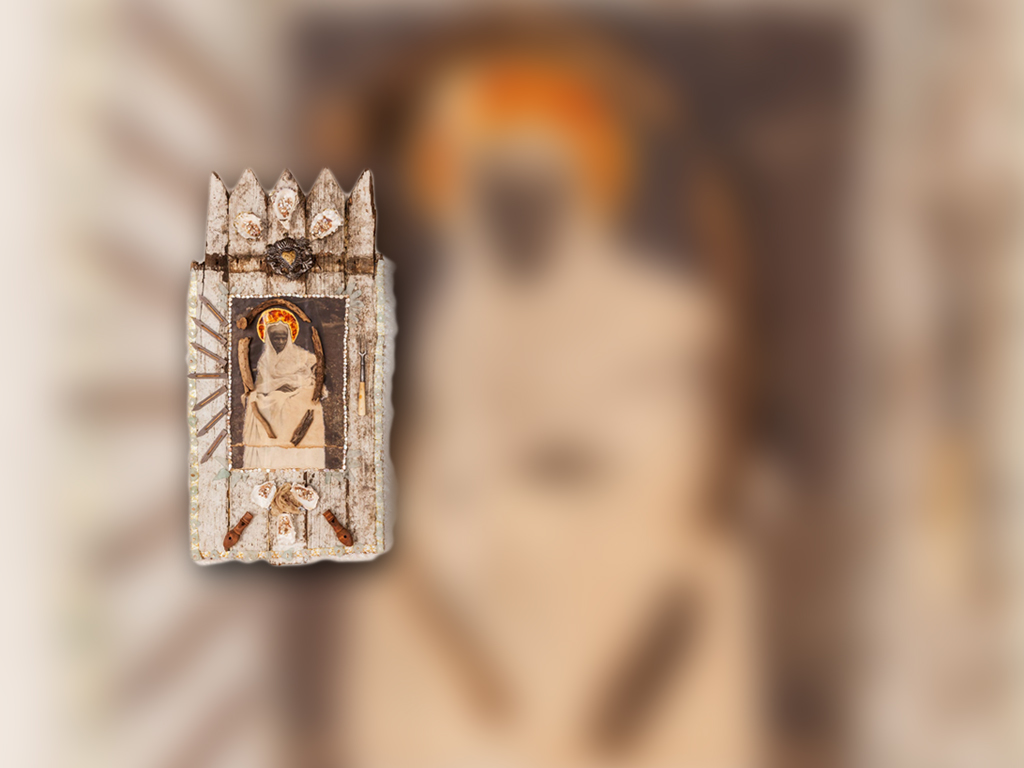
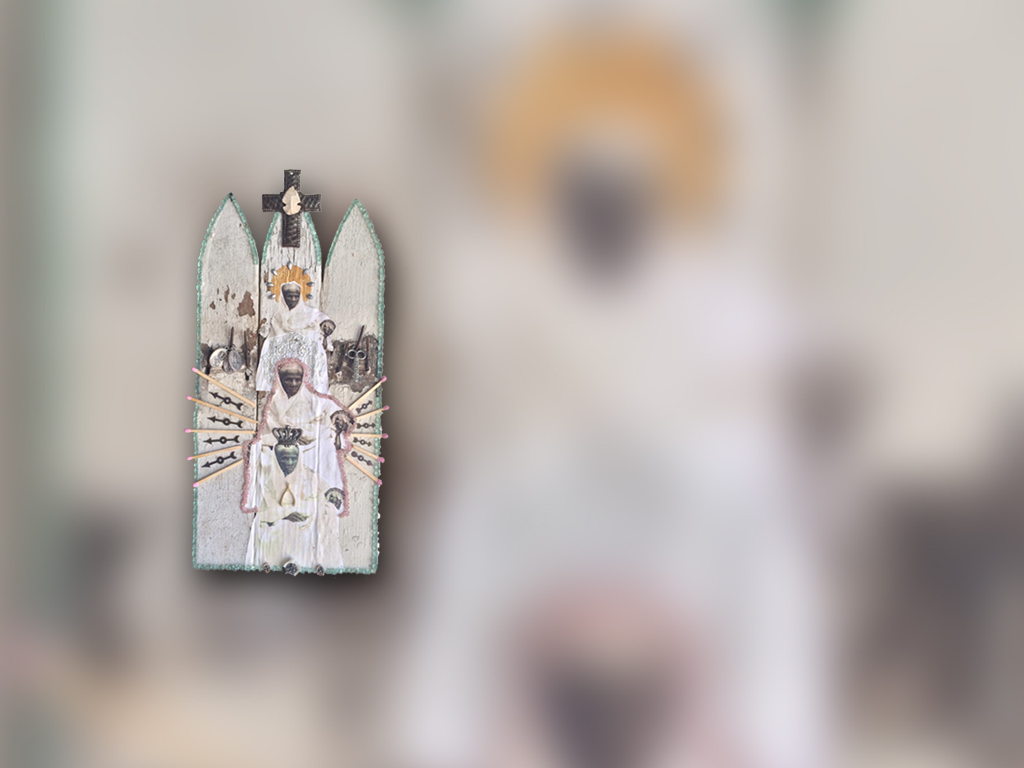
"Harriet Tubman"
Harriet Tubman was militaristic in some very wise, if harsh, ways. She told the people she assisted on the Underground Railroad that if they changed their minds and tried to run back to their owners, she would shoot them. She refused to risk the lives of everyone in the group because one person had a change of heart. She helped countless slaves find freedom. She also assisted John Brown by recruiting men to help him raid Harpers Ferry. There is evidence that at one time she brought 11 “fugitives” to the home of Frederick Douglass. John Brown referred to her as "the General" as a sign of deep respect for her bravery, strategy and commitment. After the Civil War, she worked tirelessly to help freed slaves get an education. I made a smaller “Harriet Tubman” piece for Sasha, President Barack Obama’s daughter, to thank her and her family for their brave service at a time when it is still dangerous to be an African-American leader in this country.
"Harriet Tubman for Sasha Obama"
Harriet Tubman lived with her family as a slave on a plantation, until her brave escape. She was militaristic in some very wise, if harsh ways as an escort in the Underground Railroad. For instance, she told people that she assisted that if they changed their minds and tried to run back to their owners she would shoot them. Knowing they'd be beaten and tortured until they revealed the location and direction of the rest of the group, she refused to risk the lives of everyone because one person had a change of heart. She helped countless slaves find freedom. Numerous times Tubman risked her life by going back into the enemy territory of the South to assist runaway slaves in reaching the North or Canada. There is evidence that once she brought eleven "fugitives" to the home of Frederick Douglass, who also helped numerous runaway slaves. John Brown referred to her as "the General" as a sign of deep respect for her bravery, strategy, and commitment. Many other abolitionists called her "Moses" because she led so many former slaves to freedom. She also may have assisted Brown in recruiting men to raid Harpers Ferry. She served as a spy, scout, and medic during the Civil War. After the Civil War she worked tirelessly to help newly freed slaves get an education. I made this smaller version of my Tubman piece for Sasha Obama to thank her and her family for their brave service to our country at a time when it is still dangerous to be an African-American leader.
"Henry Highland Garnet"
Henry Highland Garnet was born a slave and later became well known as a talented orator. His famous speech "A Call to Rebellion," encouraged slaves to rise up and escape, at all costs, rather than wait for freedom. John Brown cited Garnet’s speech as part of his inspiration to attack Harpers Ferry. In addition to being an eloquent speaker, he became a preacher. He was considered somewhat of a radical within the abolitionist movement due to his beliefs. He founded the African Civilization Society, which encouraged African Americans to emigrate to Mexico, Liberia and the West Indies. In 1865, he became the first African American to address Congress.
"John Brown"
John Brown led the raid on Harpers Ferry (a government ammunitions building). He cited Henry Highland Garnet’s “Call to Rebellion” as part of his inspiration for the attack. He is considered by some to be the father of the American Civil War, because after his execution, Northerners were galvanized to take action. Many believe that without the attack on Harpers Ferry, things may not have come to a head leading to the Civil War. Frederick Douglass said of Brown: “Though a white gentleman, he is as deeply devoted to our cause as though his own soul had been pierced with the iron of slavery.” Harriet Tubman said of him that “he done more in dying than 100 men would in living.”
"Tappan Brothers"
Arthur and Lewis Tappan, also known as the Tappan Brothers, were wealthy businessmen who hired high-quality lawyers to represent the Africans aboard the Amistad. When their case went to the Supreme Court, all the Africans were set free and the Tappans aided them in getting home. Additionally, Lewis Tappan was a founder of the American Missionary Association in 1846, which began over a hundred anti-slavery Congregational churches. After the Civil War, he founded schools and colleges to aid in the education of freedmen. The two brothers, along with Theodore Weld, also formed the American Anti-Slavery Society. Additionally, the Tappan brothers founded Oberlin College, which enrolled both Caucasian and African-American students. Lewis Tappan’s house was burned to the ground by angry pro-slavery mobs. But this did not stop him. His commitment to abolition never wavered.
"Theodore Weld"
Theodore Weld was a public speaker for the abolitionist cause, and, together with his wife, Angelina Grimké, published “American Slavery As It Is: Testimony of a Thousand Witnesses,” which was on par with “Uncle Tom’s Cabin” as far as its influence over Northerners to end slavery. After he lost his voice in 1836, he worked as the editor of the abolitionist newspaper, “The Emancipator,” and sent countless anti-slavery petitions to Congress. He also helped the Tappan brothers to form the American Anti-Slavery Society. He’s considered as important, if not more, than William Lloyd Garrison in the fight for abolition, but due to his private nature, he often used a pen name, and thus was not as well-known as Garrison.
"William Lloyd Garrison"
William Lloyd Garrison was a good friend of Frederick Douglass' and ran the abolitionist newspaper "The Liberator." He continued to fight against slavery despite being physically attacked, enduring repeated death threats, and being burned in effigy. After a personal feud between Douglass and Garrison, they put their differences aside when the Civil War broke out so they could focus on the much more important issue of slavery.


